


The digital design landscape of 2026 is defined by balance: between AI and human creativity, between polished and imperfect, between experiential richness and performance. Designers who embrace new tools — AI, WebGL — while holding tight to human, inclusive, and meaningful purpose will lead the industry.
Digital design as we know it — people manually crafting interfaces, illustrations, and visual systems — will shrink. Not disappear, but compress. New tools don’t replace vision; they amplify it.
The year’s trends
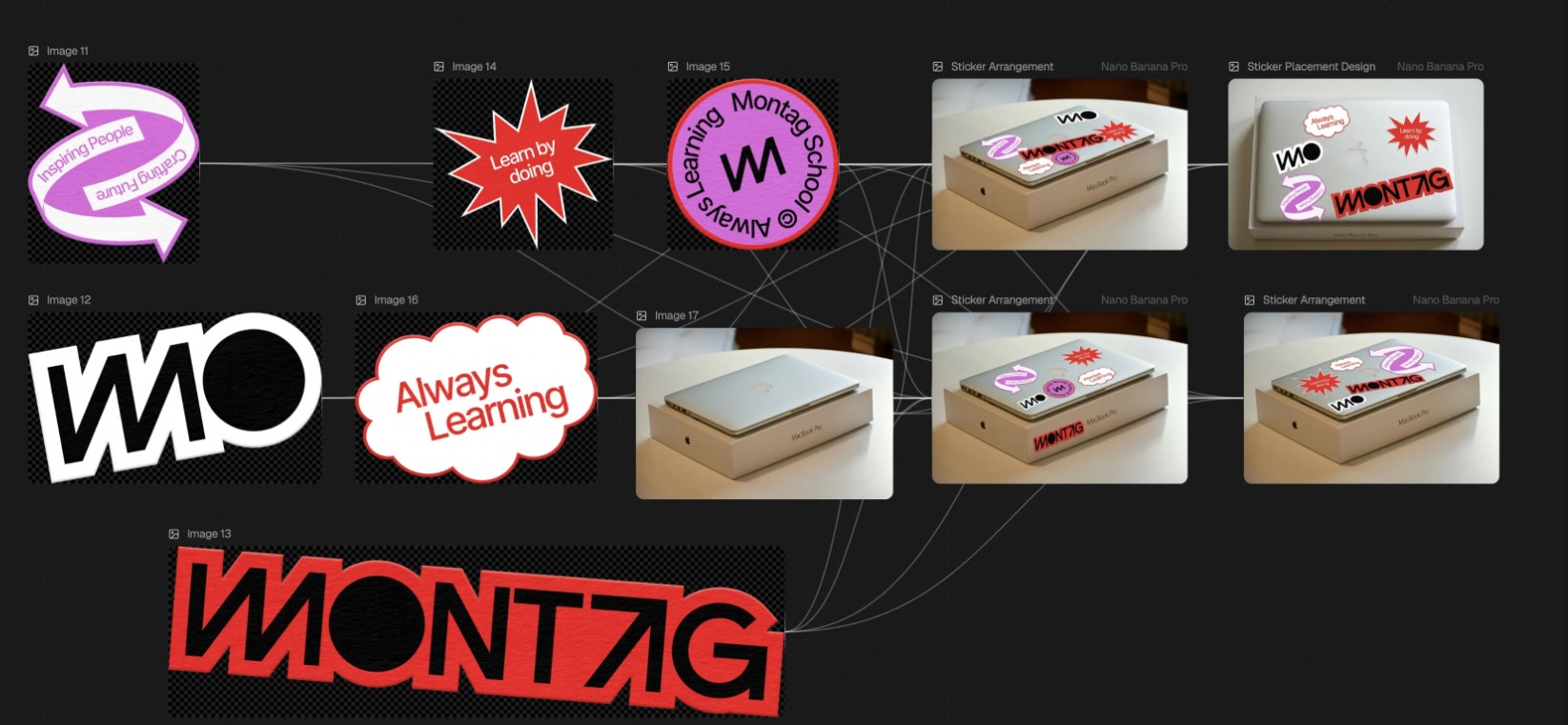
Node-based AI design tools
Designers build complex AI workflows through node-driven visual interfaces — models, prompts, data, and logic connected in a modular way. The result: fast experimentation and scalable production.
Why it matters
Full control and transparency over AI processes, easy to adjust, remix, and scale.
Tip: Start with simple node chains and expand gradually so your system stays clear and reusable.
Neo-minimalism & micro-maximalism
Minimal doesn’t mean boring. Clean layouts are paired with bold typography, color pops, or intricate micro-details. One strong element makes all the difference.
Why it matters
The perfect balance between clarity and personality — every page finds a unique voice without cluttering the space.
Tip: Let one strong element take the spotlight. Keep everything else quiet.
Vibrant color systems & chromatic expression
2026 is bold with color again. Dynamic palettes, gradient layering, duotones, and reactive color schemes that adapt to mood or context become the new standard.
Why it matters
Color becomes a storytelling device — representing brand emotion, energy, and inclusivity.
Tip: Experiment with accessible vibrancy — balance saturation with contrast for legibility.
Cinematic motion & micro-interactions
Motion design becomes a primary branding language. From subtle micro-interactions to cinematic transitions, movement now tells the story where words don’t reach.
Why it matters
Movement guides attention, conveys personality, and creates a natural flow through the experience.
Tip: Every animation must have purpose: delight, inform, or direct. Nothing moves for decoration alone.
3D elements & immersive experiences
Using WebGL, sites now feature interactive models, scroll-triggered animations, and AR previews. A shoe you can spin 360° or a virtual tour through a space — Nike and IKEA are already leading the way.
Why it matters
Users can virtually try on products, visualize a fit, or navigate environments before purchasing — higher conversion, fewer returns.
Tip: Optimize performance — a slow 3D model hurts more than it helps.
Experimental navigation
Not all websites follow the standard “Home / About / Contact” path. Radial menus, hidden drawers, interactive maps, and nonlinear journeys — navigation becomes exploration, not routine.
Why it matters
Unconventional structure creates memorable experiences and differentiates brands in crowded, competitive spaces.
Tip: If you dare to experiment, make sure the user always knows where they are.
The designers who thrive in 2026 aren’t those who reject AI, nor those who let it think for them. They’re the ones who use it with intention — keeping the human at the center of every visual decision. The future of digital design isn’t about less or more. It’s about smarter.


